By Christine Thackeray
Two years ago Rebecca Talley and I both had our first books come out about the same time. The first time I spoke to her on the phone I remember we got on the subject of marketing. She told me (I hope you remember this, Rebecca) that she was worried about it, and I told her I wasn't at all.
Well, ignorance is bliss. I told all my family and friends about my first book, got a few strong reviews, started a blog and website, did a few less than stellar signings and thought the world would race to the bookstore and gobble up every copy. Instead, it didn't even get a double printing. I was devastated.
This spring my second novel is about to be released, and I know in the next month or so I've got to roll up my sleeves. I'm so grateful for the wonderful advice of our new marketing director at Cedar Fort who called with some good pointers, but I'd be interested in seeing what other authors have found most successful.
Blog tours can be very effective, as well as Facebook.
Also, putting up reviews on Deseret, Good Reads and Shelfari.
I've heard mixed reviews about book signings but I do think they are worth it even if just to get the staff excited about your book.
I get a little jealous of YA who can do school visits because its a little more difficult to find groups of people in my market- LDS fiction. I've applied to a number of writer's conferences to speak and have tried to be more involved.
I know very little about where to get hard copy reviews, especially in the LDS market.
How do we reach out and get people to know we are here?
Has anyone had real success with something. Any ideas???
Saturday, February 13, 2010
Marketing: The Hardest Part of Being Published
Friday, February 12, 2010
Writer's Conferences: LTUE
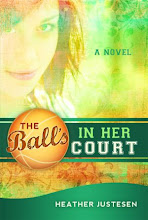
By Heather Justesen
Every year BYU hosts a sci-fi/fantasy writing conference called "Life, the Universe, and Everything." I've known about the conference for at least seven years, but my schedule has never permitted me to attend until this year. The conference runs Thursday, Friday, and Saturday the weekend of Valentines (every year, as far as I've been able to tell), and then there's the magic word--it's FREE, which puts it easily in my budget.
Unfortunately I got a late start on the day, so I didn't arrive until after noon, but it was an interesting day filled with varied classes I'm sure I wouldn't have experienced in any other way. You might note that I write contemporary romance, not sci-fi/fantasy, and I admit, there were a number of elements taught in the classes that don't apply to my writing, but there were still many that do.
I think the most fabulous part of being a writer is knowing that no matter what I learn, there's always a possibility that someday I might be able to work that into a story. I may never write a character with multiple personality disorder, but I might give someone a deceased parent who had it. I have no intention of writing horror, but I'll be able to use the portions from the class that apply to suspense.
And really, how do I know what I'll be writing in a few years--some of that might come in more handy than I expect.
After classes ended a bunch of us ended up at a restaurant together to talk and eat and laugh together. I met a lot of great women I never knew, and look forward to getting to know them better in the future. That's another great reason to attend conferences--networking can be the bomb!
Several times in the past year or so I've heard writers say that they didn't go to any conferences before they were published because they couldn't justify the expense. However, like many, many other authors out there, I can tell you that I probably still wouldn't be published if I hadn't attended conferences and learned more about my craft, received feedback, and formed friendships and support groups with other writers. If you're serious about writing and want to make it more than a fun little side hobby, conferences or writers groups (like the League of Utah Writers, which can be an awesome resource if your community has one) are extremely valuable, and there are lots out there that are low to no cost.
I have a full day of classes that I'm looking forward to tomorrow, and lots of new people to meet. If you're in the area, pop by BYU's Wilkinson Student Center to catch a class or two, and if you can't go this year, make a note in your calendar for next year!
Thursday, February 11, 2010
The Diet Rebel's Cookbook: Eating Clean and Green

I am so excited! Michelle Stewart (my co-author)and I have been getting our cookbook ready to go to print, because it will be out in April. Today, it's difficult for me to think about anything else but recipes and the words that create them, because we've been going over the proof, so I'll just blog about it.
Michelle and I discovered how very much quality of food impacts health. (We found this out the hard way, after losing health for a time, then regaining it through proper food and lifestyle choices.) This information was gathered from dietary studies of the world’s healthiest and disease-resistant cultures throughout history. We wanted to know what they ate that contributed to their health, and as a result, we learned the cooking techniques they used to increase nutrition and create healthier bodies—information that is lost to us today—and quite by accident discovered that preparing food this way made it taste amazing.
"What are the forgotten and tasty traditions of our ancient ancestors? It’s no secret that a good diet was essential to their health and longevity. What did they eat, how did they prepare it, and how does this information affect the nutrition and flavor of the food we prepare today? How can applying this information help prevent disease and potentially reverse it?” - from The Diet Rebel's Cookbook
I would love to answer these questions right here and now, but for the sake of time and space on this blog, you'll have to read the book to find out the answers to these questions. :0) But don't worry, it will be out in April, and I'm looking forward to getting my recipes out of a cookbook instead of my four inch stack of recipes, where whatever it is I'm looking for is ALWAYS on the bottom.
Tuesday, February 9, 2010
Finding Ideas
by Rebecca Talley
I'm often asked how I find ideas for stories. The answer is: everywhere. I have so many ideas I'm sure I'll never be able to write about all of them. I keep track of them in a notebook, allowing some to simmer in the back of my brain for months or years.
My favorite place to gather ideas is from my own family. This works out especially well when I write for the Friend because the Friend requires that authors submit stories based on true experiences. I've written about getting stuck in the snow and saying a prayer for help, learning to sing a Christmas song in German for a lonely neighbor, and about a child sacrificing a part in a local television production to keep the Sabbath day holy.
My picture book, Grasshopper Pie, was based on an experience when my kids tried to feed me a live grasshopper.
Both of my novels have included experiences from my own life and my current work-in-progress even has snippets of conversations we've had in our home.
Another place to find ideas is in the newspaper. I read a story about a woman whose husband committed suicide. The doctors were able to harvest some of his organs for donors. The gentleman who received the desceased man's heart, wrote a letter of thanks to the widow. After some correspondence, they began a relationship and ended up getting married. Some years later, the second husband also committed suicide in the same way as the first one and the question was posed: "Did the heart remember?"
The idea for Rachel Ann Nunes's novel, Saving Madeline, came from a newspaper story she'd read.
The nightly news can also be a source for ideas. Plenty of conflict dances across our television screens each night as newscasters replay the day's events.
Ideas can come from reading other books and asking, "What if?"
Shannon Hale has been successful at retelling fairy tales and adding new twists.
You can also find ideas by eavesdropping. We were at dinner the other night and at the table next to us a couple in their sixties was discussing their relationship. We were in close proximity and they weren't hushing their voices so it was impossible not to hear their conversation. They were obviously not married, but had dated and were trying to define their relationship. I overheard a few details I didn't want to, but after they left, my daughter played the "What if?" game. She decided they'd been high school sweethearts but had married other people and were now rediscovering their love. I would've guessed they'd met on eHarmony or some such site and were getting to know one another because they'd both lost their spouses. Two completely different stories picked up from the same conversation. Of course, it's rude to eavesdrop, but sometimes it can't be helped and if a great story comes out of it, all the better.
Ideas are literally everywhere and anywhere. If you're stuck, try some of these ways to spark ideas.
Thursday, February 4, 2010
Flow
There is an instinct that writers develop after gaining some writing experience for how the rhythm of their sentences flow. Have you ever read a manuscript that seemed choppy...or worse, so long winded that the whole thing felt like one never-ending pile of mush? I have. And they were my own manuscripts.
At first I had no idea how to fix the problem, but after I got a little practice under my belt I realized that the length of my sentences had to be varied. They couldn't all be short or long, and they couldn't all have the same rhythm when they were read aloud. Like music, the language had to be interesting, broken apart by differing speeds,rhythms, and pauses.
Try reading your manuscript out loud to yourself. Does it sound short and choppy? Are all the sentences the same length? Try to vary the length of the sentences in each paragraph until they sound like they flow well when read aloud. Sometimes of course you may purposefully shorten or lengthen a few sentences in a row in order to create tension or another type of mood.
In any case, paying attention to the flow of your language will make your writing much more professional and enjoyable to read. After awhile, you will start to vary your sentence lengths automatically without even having to think about it.
Kersten Campbell
"Confessions of a Completely Insane Mother"
www.kerstencampbell.com
Tuesday, February 2, 2010
Everyday Challenges bring Everyday Excitement
I’ve been my 87 year-old mother’s care-giver for the month of January and will continue to be for the first two weeks of February. Being a caregiver is 24/7. It is physically fatiguing, emotionally demanding and mentally draining. But surprisingly, I have found it to be spiritually breathtaking.
At times it brings tears to my eyes as I watch her aged body struggling to walk, gripping her walker for fear of falling, as she moves about, and I remember the mother who could run as fast as me when I was in trouble. I think my mother often felt physically fatigued, emotionally and mentally drained as she dealt with my tantrums, frowning face and stubborn attitude, and I applaud her patience.
We laugh when we talk about old age. We cry when we reminisce about my father. I will miss her when she returns to Ferron and back to my sister who is her real caregiver, yet I know I will feel the relief of not having to be on 24/7 watch.
Needless to say I haven’t had time to write or paint, and my incoming e-mail is stacked high. But I’ve had time to reflect on the fact that this experience may make me a better writer - a better artist - a better person. One who is more in tune with the creative side because of the depth of the feelings that stirs within me when I sit beside her and view life from her personal experiences. It’s an education you can’t get in a class because it’s and education of the heart. An education of love.
I leave you with this quote from Ray Bradbury. "Love. Fall in love and stay in love. Write only what you love and love what you write. The key word is love. You have to get up in the morning and write something you love, something to live for."
Monday, February 1, 2010
The Nothing Box
By C.L. (Cindy) Beck
There's no doubt about it, men and women think differently. A man can walk past a piece of lint that's on the floor and never see it ... even though it's the size of Chicago. A woman, on the other hand, notices every piece of lint, string, or dust in the universe.
If a group of fans composed of all men and one woman were watching Keanu Reeves filming The Matrix: Sequel 25, the guys would be cheering and clapping over the manly stunts. The woman would be staring at Keanu's black overcoat, then interrupt the filming by walking up to him with scissors in hand and saying, "Excuse me, but you've got this little piece of thread hanging from your collar. Let me just cut that for you."
In light of that, and because this video is so hilarious, I'm posting it for your enjoyment, as well as for your edification. You never know when you might need to reference the thoughts contained therein for your next male character.
--
On a more serious note, the plight of the poor Haitians seems to be growing worse by day, and my heart breaks for them. I'm posting an offer here that I posted on my personal blog. In an effort to help, I'll be donating $1.00 to the Church of Jesus Christ of Latter-day Saints' Emergency Response Fund and/or to the Red Cross for every comment that's made on this particular blog article. The offer is good from now until Feb 5, for up to a total of $200 (total for both my personal blog article and this article). Let me know in your comment if you have a preference on those two charities.
If you don't have any cash to spare for the Haitian people, now's your chance to have $1.00 donated to Haitian relief by simply leaving a comment here. Multiple comments by the same person will only be counted once, but feel free to have your friends drop by so their comments can be counted as well.
----


 Posts