Pages

Monday, June 13, 2011

Patience and Learning

by Cheri Chesley


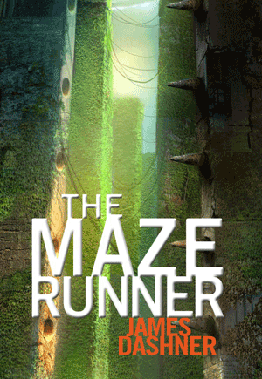
Last Tuesday, my book club reviewed James Dashner's The Maze Runner. I just want to say, I hang with a keen group of ladies. These women are smart, and savvy, and--as Mr Dashner will learn if The Death Cure doesn't have a satisfying ending--dangerous when crossed. Hey, most church ladies are.

What I love is, like they did with These Is My Words and The Hunger Games, our conversations became deep and introspective. And I love how 8-12 women can get together in a room to discuss the same thing, differ in opinions and reasoning, but still have a great time doing it. I just may live for book club.

The best part about these monthly meetings--for me--is that I feel I come away with a better understanding of what makes a good book. I love getting so many different perspectives and ideals about the same thing. It's incredible what readers can get from the things we write down. And if all this tallies up to making me a better writer, then it's time well spent.

And let's hope, for Mr Dashner's sake, that my book club is satisfied with how he ends his trilogy. If not, I just may bring them to his next local book signing. ;)

Saturday, June 11, 2011

The Right Ending Makes All the Difference


By Christine Thackeray


For me, there is nothing worse than when a story doesn't end properly. It hankers at my brain and I try to figure out why it doesn't work. Yesterday my daughter was watching SALT with Angelina Jolie. It's got one of those unsatisfying endings. Although I LOVED the action, the end left me saying "Meh." "I am Legend" was the same way. Worst of all was "Unbreakable" by M. Night Shyamalan. Great idea, stupid, stupid ending.


So what makes a good ending? First and foremost, the main character has to have an EPIPHANY and learn some great truth. (If you kill of the main character that can't happen.) That was my issue with Salt. You didn't feel the character had grown from the experience, she played it so dead pan. In the end, a reader wants to get the point of why they have wasted the last two hours or ten hours for a good novel, and if there isn't a great truth at the end, they feel gypped.


Second, don't leave people out in the desert. You need to tie up most subplots. It's a little corny when every single detail turns out perfectly but you need to at least give an idea of where each of the characters you've introduced end up.


Lastly, finish with an image that sticks with you. Ensuing action is fine, the first kiss is great, but who will EVER forget how tacky it was when the last of the original Star Wars ended with the photo shoot at the Ewok village. Stupimongo, right? My personal favorite ending of all time is in "Ever After" with Drew Barrymore. (It just came out on Netflix.) It's a remake of Cinderella and when Angelica Houston comes before the queen, thinking she had won and gets poned, it is a completely satisfying moment.


Ending well makes the reader want to read your next book. Even if there is slowness in the middle, a great ending can make up the difference.


Thursday, June 9, 2011

Persuasive Writing

A couple months ago, my son was taking a public speaking class, and one of his assignment was to give a speech using Monroe's Motivated Sequence. According to Wikipedia, the sequence is "a technique for organizing persuasive speeches that inspire people to take action. It was developed in the mid-1930s by John Monroe at Purdue University. It consists of these steps:

Attention: Get the attention of your audience using a detailed story, shocking example, dramatic statistic, quotations, etc.

Need: Show that the problem about which you are speaking exists, that it is significant, and that it won't go away by itself. Use statistics, examples, etc. Convince your audience that there is a need for action to be taken.

Satisfaction: You need to solve the issue. Provide specific and viable solutions that the government or communities can implement to solve the problem.

Visualization: Tell the audience what will happen if the solution is implemented or does not take place. Be visual and detailed.

Action: Tell the audience what action they can take personally to solve the problem.

Rebuttal: Inform the audience of arguments against your solution and provide reasons to maintain faith in your solution."

When I read through these techniques, I thought to myself, these would work great in non-fiction persuasive writing and can even work in fiction. For example, a novel beginning with some attention grabbing scene is far more likely to keep the audience wanting more than something boring, and there's usually some kind of a problem that needs resolution in a fiction work. The character actually goes through the rest of Monroe's Motivated Sequence in trying to solve the problem, visualizing (showing) how to solve it, taking action to solve the problem, and coming to a resolution even against the opposition.

Of course, there is a little more artistic license and flexibility in fiction versus non-fiction, but the idea is still there. And the desired result is still the same: convincing your audience to keep reading so that you can get published, and possibly make the New York Times Best Sellers List, because you were successful in persuading your publisher to publish the manuscript, and then used the info in marketing it. :)

Have a nice day!

Wednesday, June 8, 2011

Crater Lake: Setting or Character


WARNING: This may seem REALLY stupid...but I'm fine with that.


Cedar Fort recently accepted my 2nd novel, Crater Lake: Battle for Wizard Island and it is set to release sometime in the spring of 2012. Naturally I'm thrilled. This is a mid-grade fantasy set at Crater Lake in the Oregon Cascade mountains.


I've been thinking about the importance of Crater Lake to my novel. It really couldn't be set any place else. There are so many facinating details about Crater Lake that bring life to the story. Wizard Island really is a small volcano sticking out of the water of the crater which was created by the collapse of a massive volcano 7700 years ago. There really is a rock structure in the lake called the Phantom Ship. There really is a place called Danger Cove. These real settings create a realism within the story that allows me greater latitude in building the mythology of my fantasy world. Without the realism and consistency, even in a fantasy world, the story will fall flat.


I recently went to a wax museum with my family. Yes, it was a little creepy but I found myself evaluating each wax figure for authenticity. I had my picture taken next to Angelina Jolie and Jessica Alba (much to my wife's chagrin) and even through the craftsmanship of the wax figures was impressive, they didn't look real. The figures didn't look right and therefore were not believable. So I had my picture taken next to Pamela Anderson and David Hasselhoff. Guess what--same problem. But then I got my picture taken next to Danny Devito as the Penguin from Batman. Wow. That was a chilling and believable depiction.


So what does a wax museum have to do with a fantasy world set at Crater Lake? In both cases believability matters...alot. The moment I start pointing out problems with the wax figure or the setting of the novel, the magic is gone. The experience becomes empty as the emotion and awe is stripped away because of imperfections and inconsistencies.


I think of other settings that have captured my imagination and to me they often feel more like a main character than simply a place where the story takes place. I think of Hogwarts with its moving stairs, enchanted pictures and roaming spirits. I think of the vibrant Land of Oz, the Bat Cave and the magical Fablehaven. These settings don't simply allow the action to take place, but they push the conflict and action forward. They are not merely the backdrop, they are dead center in the story. Hopefully Crater Lake will be center stage as well.


Monday, June 6, 2011

My New Cover

Seeing the cover for the first time is one of the things I look forward to the most--especially when I love it as much as I do this cover. What do you think? Thank you, thank you, thank you, Brian! You totally nailed it!

Thursday, June 2, 2011

Quick Book News

                                                     By Trina Boice
                                                http://www.boicebox.com/
                                       

Less than two months after Glenn Beck and Fox News agreed to part ways, the conservative talk-show host has reached a new deal with publisher Simon and Schuster that includes the launch of a new imprint. Mercury Ink will release fiction and non-fiction titles.

Borders bookstores may have a savior. The private-equity firm Gores Group is in discussions to buy more than half of the bankrupt bookseller in a deal that would keep the business running. Borders has been soliciting offers since it filed for bankruptcy in February. Gores, which buys stakes in distressed companies and tries to rehabilitate them, isn’t the only bidder on the horizon, though the other potential buyers haven’t been named. Interest in Borders has picked up since Liberty Media’s recent bid for Barnes and Noble.

Science fiction writer Orson Scott Card is fighting with his talent managers over alleged commissions due from the film and web adaptations of Ender’s Game. A movie version of Ender’s Game has been long anticipated by sci-fi fans. The 1985 novel garnered many prizes, including the Hugo and Nebula awards, and is now regarded as a classic of the science fiction canon.

Call for Articles

Cedar Fort Books is currently seeking articles written by Cedar Fort authors. If you're at all interested in submitting a guest post on a topic of your choice, visit http://www.cedarfortbooks.com/submit-a-guest-post/.

This is a great way to get your name out there and to help make Cedar Fort Books the "go-to" place on the internet for valuable information. Past guest articles have included: the road to publication, how to create an online presence, using leftovers, caring leaders, and teaching gospel principles to kids and teens.  Articles are limited only by your imagination.

If you have any questions please email.

Thanks,

Mariah Overlock
Marketing Publicist
www.cedarfortbooks.com
facebook.com/cedarfortbooks